
My Beef With Bittman … But, Actually …
Mark Bittman, author of Food Matters (Simon & Schuster 2009), How to Cook Everything (who cares who published it? But age maters — it was ’08), and author of the former NYT column “The Minimalist,” was on NPR recently, hawking a follow-up to his break out success. I was listening on my headphones, probably scarfing down yet another overpriced meal from Pret as I listed to Bittman explain that How to Cook Everything: the Basics (with 1,000 photos – for reals) is his response to feedback/criticism he got on How to Cook Everything. The Basics describes – and apparently illustrates – everything from the most simple (boiling water) to the most overwhelming (how to select kitchen equipment and stock a pantry). I sat down to write this post, ready to argue him up and down on several points, and to set forth with crystalline clarity why in fact one should never use soap on a cherished cast iron skillet, why having good kitchen equipment does indeed make one a better cook, and why not every star chef should jump in front of a camera. (When did “triple threat” turn from sing/dance/act to write/cook/be-on-every-show-even-peripherally-relating to food?)
Then I made the mistake of looking him up online. I should’ve just stuck to my workday tainted impression of Bittman as another media hungry foodievangelist. But now I can’t. How can I argue with a guy that uses his good name to make a case for limiting junk food ads in schools?
The Revel Mama in me is cheering him on even as I’m dreading my partner’s turn to watch down our DVR list and as I’m silently casting my curses against Spain: on the Road Again. I love Spain but I will gouge out innocent olives out if I have to sit through one more awkward dinner with Gwyneth and Batali, whose recent croc in mouth disease further deflates my appetite. (In November, Batali was quoted as equating bankers to Stalin and Hitler, and just last month shelled out $5.25M to settle claims that he cheated waitstaff out of tips).
Bittman brings to our attention the fact that only one state has banned junk food advertising (I could survive on Maine lobster) while nine states (and this number is growing) expressly permit advertising on school buses. How can I say one bad word against this man when I, myself, envision retiring to Sao Paolo for the sole reason that in 2006 its mayor passed the “Clean City Law,” which banned outdoor advertising of all kinds. Despite urgings from alarmist businesses against instituting the ban, now 70% of the city’s residents agree that it’s been beneficial. Pictures of the city, wiped clean of visual pollution (not even fliers are permitted — can we get that in Brooklyn??), speak for themselves.
Not only does Bittman have a compelling fiscal argument (the ad revenue cannot begin to cover the cost of the obesity epidemic it feeds), but he has a sound legal one as well. While the environmentalist in me was questioning the necessity of publishing 1,000 photos (1,000!), the Revel Lawyer in me is more impressed by Bittman’s command of the law. He clearly understands BigFood’s efforts to twist the First Amendment in a way that would make the drafters’ stomachs churn. Bittman explains that the First Amendment was applied to advertising in the 1970s to give the public access to information about products, but now it’s being used as a corporate sword to swipe away at kiddie consumers’ protections. The legal test for whether the First Amendment applies to permit unfettered commercial speech, Bittman notes, is that the speech itself must be truthful and not actually or inherently misleading. As he further explains, authors of a recent article in the journal Health Affairs make the (obvious to any parent) point that children under 12 cannot discern bias in marketing and so all advertising targeting them should be subject to regulation because it is inherently misleading.
Well, Mr. Bittman, I guess your deft legal ability makes you a quadruple threat. Now, back to my beef with you. Hmm. I think I’ve forgotten. Or maybe it wasn’t so important. Perhaps it was more a green-eyed author than work-a-day tedium that initially inspired this post. Either way, I’m glad it led me past your shiny celebrity chef veneer to hear what is clearly an important voice in pushing back the BigFood giants and protecting our most valuable assets. And for that, I thank you.
One little barb I can get in on Bittman: he teases the Health Affairs article authors about the boring name of their article (“Government Can Regulate Food Advertising To Children Because Cognitive Research Shows That It Is Inherently Misleading.”) but in my opinion slightly missteps with his own headline. When I first read the title, “The Right to Sell Kids Junk,” in The New York Times Opinionator, 3/27/12, I thought he was going to tell me it’s okay to sell my daughter’s Thomas the Tank Engine collection on Ebay while she sleeps – which I was fully ready to agree with. Then I read it and realized it’s something far more important than clearing kids’ clutter, which is putting limits on the clutter they can’t control.
Subway Farmer
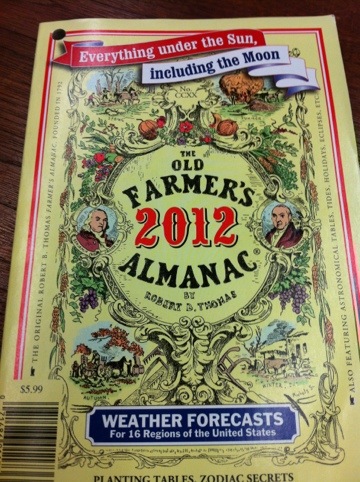
for my morning commute… offering me this random statistic in “2012 At A Glance” (p. 16):
34: hours, on average, that commuters idle in traffic annually. That’s a lot of idling!
QUESTION: how does your commute stack up? How many hours do you guess you idle annually? Go ahead…gimme the dirt!
Love Thy Neighbor
Especially the quirky ones…

Seeds, Glorious Seeds
Well, I didn’t win the lottery … in case you were wondering. So it’s back to being on budget. I am definitely trying to keep costs down this year. The economy’s not good. My position is being moved and I am not, so I expect to be out of work by the end of the year. Last year I spent more than I wanted to on gardening goodies. Finally, if the point (or one of them) in growing your own is to save money, it doesn’t make sense to dump a heap of dollars into the endeavor.
I kept all this in mind as I reviewed my stash of seeds to decide what is going in the ground (or pots) this year. I have nearly all the seeds I want/need but did determine a gap: I am looking for heirloom beans. I had a couple of seed catalogs on hand that friends have given me — a Park Seed catalog that I started to flip through till I realized it’s a year old, and a Territorial Seed Company winter 2011 catalog. Neither will do me much good right now so for the first time, I ordered seed catalogs. I could be more environmentally sound and browse them online but I do like having paper in my hand and limiting off-hours computer time (except for updates here and the usually too often FB check-ins). So I have put in my requests from Seed Savers Exchange and Territorial Seed Company.
Seed Savers Exchange has been around since 1975 and is a non-profit dedicated to preserving and promoting heirloom vegetables, fruits, flowers and herbs. Basic membership is $40.00/year (with the year based on quarterly publications, not calendar years — which is important because it ensures you get the Yearbook from which you can order seeds from other members). It entitles members to a 10% discount on all catalog purchases, the catalogs themselves, and several publications about heirloom growing. SSE is an important organization because it also serves as a major seed bank: Seed Savers Heritage Farm is an 890-acre farm in Northeast Iowa that is one of the largest non-governmental seed banks in the country. This is the kind of endeavor that is worthy of support, even in tough economic times. Regular contributor and fellow reveler, Ralph, is a member and speaks highly of his experience with them. Search “savers” on this site for more on this significant organization.
I ordered the catalogs a little leery because all I have heard from people who order from catalogs is how hard it is to limit seed purchases and not get overly ambitious. My biggest lesson from last year is to KISR: Keep It Simple, Revel. It’s got to be my mantra this year, or I run the risk of overwhelming myself, my budget, my time and my desire. In practice, this will mean keeping more of my plants in one place so I’m not racing to four different locations to water them before running off to work, and to have variety but not so much that I’m constantly researching care tips. This year, I aim to make my garden a little more self-sufficient and useful (think food) but beautiful too (think flowers). A touch of spice (think herbs), and it should all be nice.
QUESTION: what lessons are you taking into your garden this year? Do you have a guiding principle or mantra? What are your gardening goals? What are your favorite seed sources? Do you have any tips to share for saving money while still growing your garden this year? Go ahead … gimme the dirt!
Spare Change
A man with a shuffling walk called, “spare change.” “Spare change,” he mumbled clearly, rotely. All of us were on the R, through the tunnel, under water. Clever of him to get the train whisking away Friday night workers from the financial district, catch them on the longest run between stops, spanning Manhattan to Brooklyn on a crisp spring night when money’s been on every mind .. when we’ve been paying money for the hope of money, when we’ve been asking ourselves if we’re worthy and if so why.
If I had money, what would I be? I’d be skinny and blonde and worry free. Maybe we pay the money for a little window of time to believe the impossible — at least, the untrue.
I’d be good to my fellow citizens but likely boringly responsible, not even a madcap cross country ride like the one I wanted to take back when I still drank wine coolers and traded food stamps for cigarette cash.
How many “It should be me’s,” tossed tonight to the night sky, and how will the dashed hopes dance with the breaking day?
Night Walk
Spring flowers





BK Swappers
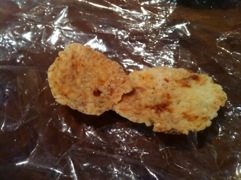
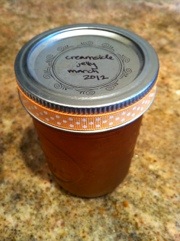
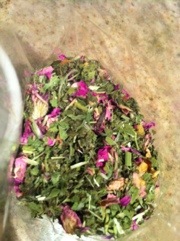
Question of the day: why can’t BK Swappers be every day?




So It Begins
Welcome, Spring!


Snuggling Up
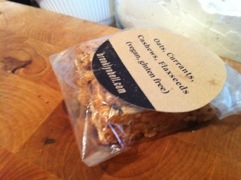
With a late night snack. Thanks to Scott, who takes great pics and makes yummy looking cookies (about to confirm), of BK Swappers. Great, Scott!

 revelgardener