Summer: My How It Flies

From the last hot soup and oven baked bread at the dawn of the season…

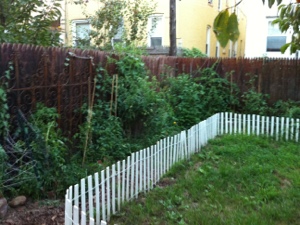
20120831-073920.jpg

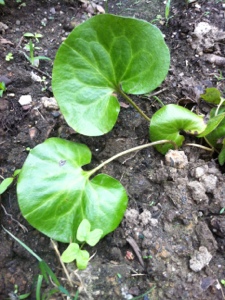
To ivy received and transplanted, courtesy of a departing neighbor…

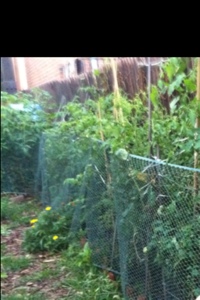
20120831-074117.jpg

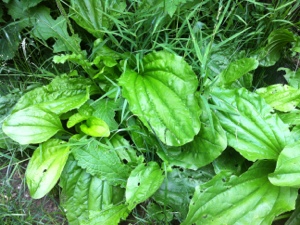
To nearly exhausting my supply of wild growing plantain in the yards, for quick treatment on countless bites…

20120831-074337.jpg

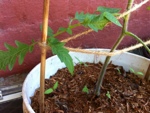
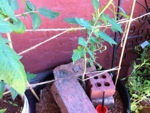
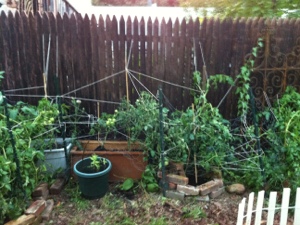
To observing how to properly stake a tomato plant…

20120831-074542.jpg

Obviously not the work of these still fumble-prone hands…

20120831-074610.jpg

But the work of Aimee at Red Garden Clogs, who asked if I might want to give refuge to her various orphan darlings.

20120831-074644.jpg

And I did.

20120831-075033.jpg

And they gave right back to me.

20120831-075150.jpg

20120831-075203.jpg

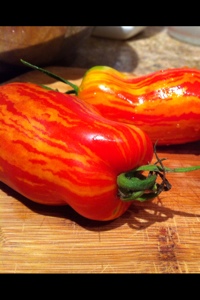
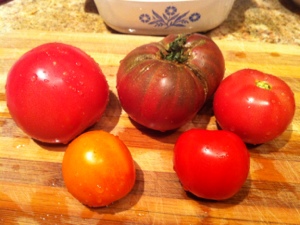
And gave…

Thank you, tomato farm.

20120831-075437.jpg

20120831-080346.jpg

See you again next summer?

20120831-080511.jpg

The Fungus Among Us

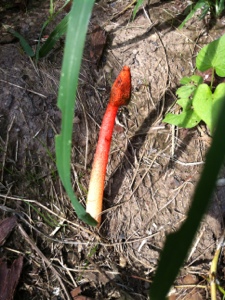
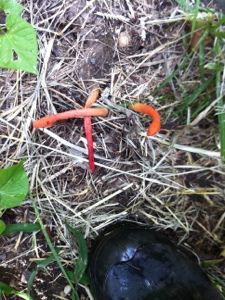
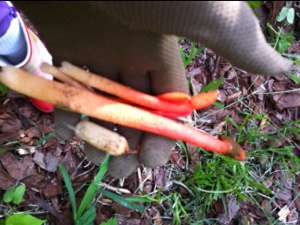
These dudes are, as we used to say, kind of grody. I still have not been able to figure out what kind they are, but they attract flies, especially around their tip where they gave some dark slithery material that looks like, as we used to say, dooky.

QUESTION: Anyone? Anyone? Recognize this shroom? I posted about it last summer, and they’re back again this year apparently with a vengeance since there are more now to be found. If you know what they are, go ahead … Gimme the dirt!

20120820-132311.jpg

20120820-132324.jpg

20120820-132340.jpg

Two Out of Three Ain’t…Meh

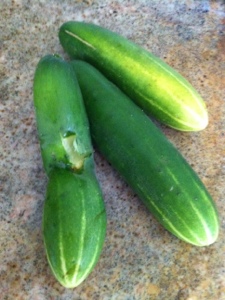
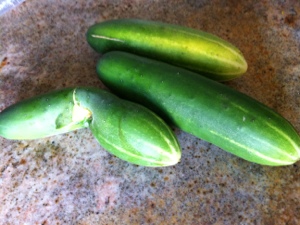
Gardening…it’s not for the feint of heart or ego. Once so proud of my decision to place old metal gates I’d been storing in my basement out back as a permanent feature of the garden and convenient trellis to boot, I failed to consider that it’s ornate swirly design might produce misshapen fruit. In this case, it speared my cuke. It probably wouldn’t be so bad if the haul weren’t so meager to start. These three are the first and so far only production from those vines. Oh well, c’est la vi(n)e!

20120818-131553.jpg

20120818-131600.jpg

20120818-131620.jpg

PEACHY!

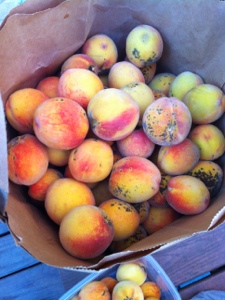
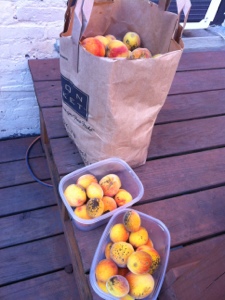
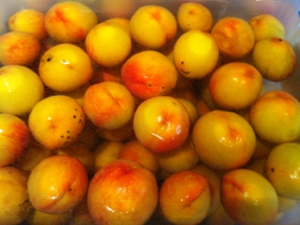
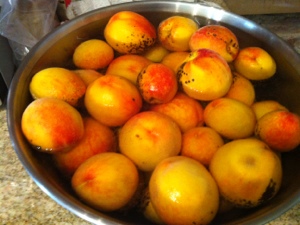
It’s not the best harvest I’ve ever had. I had to toss a bunch. The ones that made it have spots. But late last night I was reading up (scanning, rather) on the viability of peaches with these dark spots, and learned that the peaches are fine to eat but that the tree itself should be treated to prevent a recurrence next year (and that repeated years of the brown spot blight are bad for the long term viability of the tree). (See below, for more on this). So, having learned in the middle of the night that my peaches were fine to eat, despite their funny look, I was out early this morning, grabbing as many as I could in the bit of time I have before rushing upstairs to log in at work. By this evening, there were only a handful left on the tree. Those will have to wait till the weekend, unless the errant squirrel I saw hovering on the fence near the peach tree has its way. In the meantime, I found a couple good sites with recommendations for preserving peaches, and several on what to do with too many ripe peaches. I’m planning to freeze mine, since I don’t have a dehydrator, and it seems like the easiest option. I will set aside a few to can as well but since I haven’t done it successfully on my own yet (despite a very helpful class from Red Garden Clogs), most of these are freezer bound…

As for the question of the dark spots, a slightly snarky but apparently well-informed poster on GardenWeb forum had the following to say.

;

Digdug:I believe your peaches have peach bacterial spot, although if you Google this term and “peach scab”, you will find the two diseases difficult to distinguish. After years of wrestling with this distinction, I more or less concluded that bacterial spots are usually spread farther apart, as yours are, often beginning on the lower part of the peach, and are darker in color. I believe that peach scab usually begins at the top of the peach near the stem, then spreads outward, eventually forming a solid mass.I have had both of these diseases many times, and both are highly damaging to peaches. Yes, you can still eat them, but it’s not much fun to do so, since you cannot even properly peel a peach with either of these diseases, which often affect the flesh to a depth of 1/4 inch or more. Many people peel peaches before eating, and peeling is standard procedure before freezing peaches, which is what happens to most of ours. While it is very important to try to prevent even minor damage to the fruits, in many cases the scab or spot spreads and stops growth of the peaches which of course is even worse.

I wish you would not require us to guess where you live, but from the size of those peaches I have to guess somewhere in the coastal or interior Southeast. The rainy spring weather and early warming of the entire mid-Atlantic favors both of these diseases. Once these diseases are established on peaches, there is nothing to be done, since prevention is the key here, not cure. Application of bleach would be very unwise, and sulfur would not help at this point either. In fact, I believe sulfur to be useless against these diseases at any stage.

Bacterial spot can also infect the leaves of peach trees, causing them to spot, turn yellow, and eventually fall off. The disease is also expressed by lesions on the limbs and twigs that exhibit sap leakage. Three or four years of unchecked bacterial disease can easily kill a peach tree. I have had pretty good luck with control of bacterial disease by applying two dormant sprays of a strong copper product called Kocide. Applications should be made in late fall, and again just before bud break.

The most effective preventative that I have found against peach scab, which you will also no doubt see sooner or later, is a good spray of Daconil fungicide immediately after shuck split, and another around a week later while the peaches are still very small. I have tried other fungicides, including Captan and Topsin, and they do not seem to work for me. No spray will be effective once the peaches begin to size up, because the diseases are already there, though you cannot yet see them.

You don’t mention the variety of peach you have there, but most modern peach varieties are bred to color up red well before they are soft ripe, and can hang on the trees for over two weeks while bright red and still not be soft and sweet enough to pick. Commercial growers have discovered that consumers prefer bright red peaches, but still need a hard peach to ship. Truth be told, many yellow peach varieties taste much better than the highly colored reds. Color is not a good indicator of flavor.

Finally, if keeping the “organic” faith is more important to you than growing good peaches, I doubt that you will ever grow decent peaches. There are some places in the country, mostly those that see warm dry weather during the growing season, that could pull off an organic peach, but not many of them are east of the Mississippi river. And so far we have talked only about diseases, not insects like the plum curculio and oriental fruit moth, which are normally present in the same areas that suffer from disease. Nor have we discussed brown rot, which often strikes later in the season. For the backyard orchardist, growing peaches is quite difficult, requiring all the help available from timely use of fungicides and insecticides.

Don Yellman, Great Falls, VA

My experience is consistent with what this poster has to say. Having a peach tree out back is lovely (and unbeatably beautiful when in bloom), but it does require a lot of care and maintenance, and might not be the best pick for a backyard organic gardener like me. I’ll have to make some decisions about whether to continue to maintain the tree or let it go the way of the mystery dogwood/elderberry bush. I’ve had the tree for a good 7 or so years, and it’s been having solid productions since it was about three years old. The last couple years, though, the harvest has been getting slimmer and slimmer due to attacks by various garden variety pests and disease. I am open to suggestions, here… Go ahead! Gimme the dirt.

20120816-233623.jpg

20120816-233630.jpg

20120816-233638.jpg

20120816-233651.jpg

The Call of the Cicada

Last night…

The cicadas are speaking now

rhythmic   secret   concentric   circular

conversing.   I interrupt their song

with my listening.   Suddenly

they stop.    And I wonder

how I never noticed their quiet

before.  I did not hear

how loud their silence.


The next day …

becomes night, and hours pass

in my inattention, till I am still

and hear past the window

a sole cicada

whose call rings the night

like an empty womb.


The Perils of Gardening While Anaphylactic

It was curious to me that a creature that previously took little interest in me would suddenly swarm to me like my blood was manna.  I’d suspected, and read, that mosquitoes are partial to particular blood.  And, based on my experience, whatever the magic ingredient, my lifejuice lacked it.  So, it was striking to me that I was attacked the other afternoon by these ankle (and etc.) biters.  So much so that I posted about it to see if others concurred that Culicidae (yes, I looked it up) dinner parties are on the rise in Zone 7b.  Reveler Ralph, a frequent commenter (thank you, btw!) noted that his experience may be skewed from the fact that he gardens primarily on a deck.  He nonetheless offered several helpful pieces of advice, including throwing off mosquitoes’ scent trackers (which is what traditional OTC products are supposed to do) by using chemical-free natural soaps made of lemon or spearmint (or just rub spearmint right on the skin and wear it under your hat — an excellent idea, which puts mint on the list for next year’s garden).  Once bitten, twice iodine, according to our fellow reveler.  (Note to self: pull iodine out of the emergency kit in the basement; the emergency has arrived).  Check out more detailed suggestions in the comments to “The Perils of Gardening.”

As it turns out, however, I am no more attractive to skeetos than I was to various 7th grade crushes when I sported a back brace, glasses and an overbite.  I am fairly certain of this because, after getting all worked up and posting on the bevy of bites across my lower body, I braved the elements again to finish staking the plethora of tomato plants out back (the story of how my garden became a tomato refuge described in “The Perils of Overgardening”).  The next thing I knew, I was feeling the strange itchiness that accompanied the first attack.  (I had chalked this up to the sheer number of bites I had, but apparently it was indicative of something more).  Oddly, this sensation seemed to come from the inside out, like I could feel it traveling just beneath the surface of my skin.  This time, I was wearing a long-sleeved shirt, full pants, and rubber gloves to avoid a repeat of the earlier assault.  Suddenly, it struck me.  I ran inside and looked at my face to see the same welts as before.  This time, they were encircled with a ruddy reddish shadiness to the skin around them, and spotted my forehead, chin and neck.  They behaved the same way the earlier “bites” did: very pronounced at first and gradually fading in color and sensation until they were barely noticeable at all.  I had assumed this rapid disappearance was the result of my swift diligence with a plantain leaf.

Checking out my new war wounds in the mirror, I recalled the time I was 9 and we were painting a shed in the woods behind my house.  At some point, my body became fully covered with hives.  A bottle of calamine lotion later, and I was fine.  I do not know why I didn’t recognize that feeling sooner.  It is a distinct feeling, and I was beginning to get it while I was in the garden.  Like there was the presence near of something that doesn’t mesh so well your aura.  Maybe the 20 (or so) year gap in time made me forget what an allergic reaction feels like.  But I was acutely reminded last night.

Now, I suppose I should get to work on figuring out what was the cause of my body’s dramatic response to this presence.  A quick Google search and a scan of the corner of the garden I was working in suggests it may be the milkweed.  It’s always possible, but unlikely, it’s those weedy morning glories I fight back nearly daily.  (Unlikely because we’ve been battling since my occupancy here began).  I have a creeping suspicion it’s a tomato plant, but I dearly sincerely hope not.  Once again, the perils of overgardening are upon us…

The Perils of Gardening

Is it just me or are the mosquitoes particularly rampant this year?  I was outside today, weeding the garden from 4:30 to 5:00, and was well awash in Off, but it was no deterrent to the little demons. I came out of the garden with a bucketful of weeds and half my body covered in bites.  According to my partner, they have “mosquitocation,” and tell each other when and where to find fresh blood. They have also, it seems, drifted down lower on the anatomy. Despite the fact I was leaning down, with my arms well within their reach, I don’t have a spot on my upper body.  Maybe they are getting smarter and sense that arms are attached to hands, which with the power of the third sister Fate can swat the life out of you.

The only thing cut short was my gardening today.  I fled to the front yard to gather up some plantain to treat myself as quick as I could.  As I was plucking the plantain leaves, I saw my next-door neighbor who mentioned his mosquitoes are so bad, he won’t even go out back.  They must be aware of this, for they’ve migrated to my side.

QUESTION: how’s the mosquito population in your ecosystem this year? Have you had any luck with products or approaches to keep them at bay? I’m not crazy about using products that smell like they don’t belong on human skin.  Can anyone recommend some good natural products or, better yet, something that might be already available in the garden?  Also share any effective treatments once you’ve already been affected. I’ve found plantain leaves to work well but if you have a bunch of bites like I do today, it’s hard to get them covered quickly, especially since the treatment is most effective within the first few minutes of getting a bite.  (I typically just crinkle them up, and rub the juice on the bites).

So, any suggestions to combat this year’s most pesky pest? Go ahead, gimme the dirt!

What I wanted to get:

20120812-175618.jpg

What I did get:

20120812-175644.jpg

The Perils of Overgardening

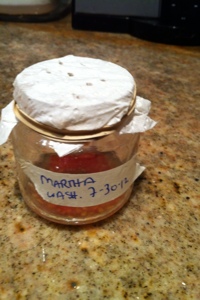
Forty-five tomato plants.  Count ’em.  45!  And, despite the sound of it, I am not proud of that.  With a piece of property with a 25 x 60 back lot, that’s a lotta tomatas.  I was talking to my friend with property (serious property) in Mississippi, and she was up to her neck in tomatoes she had to can.  She said she had 60 plants, and tomatoes were coming out of her ears.  Although I promised to simplify (if not downsize) my gardening habit this season, the truth is I’m just a junkie.  That, and I completely underestimated my ability to save seeds that would ever amount to anything.  I read the instructions, and generally followed them, taking seeds from my tomatoes last year, putting them along with some of the tomato pulp and water in baby food jars on on the windowsill (and, when I was following directions, in the basement).  I covered them with paper towels and rubber bands until the seeds got all moldy and yucky, then I scooped out the mold and guck, rinsed the seeds, then let them air dry on paper towel covered plates.  I was surprised how very many seeds I was able to save this way.  But in the mindset of a typical novice gardener, I never imagined that one seed would equal one plant (I feel like a teenager thinking you can’t get pregnant if you have sex just once and we all know where that leads).

Even though it’s obviously illogical now, somewhere in my mind I must have been thinking that I wouldn’t possibly end up with plants from the seeds I saved.  I was sure that, somehow, I would fail. Maybe it was the votes of no confidence coming from outside my own self-doubt.  Most public seed saver exchanges require their participants to have at least a year of seed saving experience under their belts.  Since I wouldn’t be trading them online, I organized a fun, but intimate seed saver exchange with fellow blogger/gardener/revelers last fall (calling it, ambitiously, the Best BK Seed Exchange Ever … or something equally obnoxious).  And though I was able to unload some of the seeds there (sheepishly sharing them, since I had no belief that they would ever become anything but the lifeless pebbles they appeared to be), I ended up with more than I brought to the party.  As for the extra I had on hand from my own obsessive seed saving last summer, I threw several seed packets in with Christmas gifts and the occasional birthday card.  Others I tucked away with random greetings and how-are-you-doing-IhavetoomanyseedsIambeggingyoutotaketheseoffmyhands “care packages.”  Word from my mother is that New York-origin seeds winter-sown in Wisconsin  (I have a sister whose punctuality extends to her garden) have been producing bountiful fruit under the watchful eyes of my nieces and nephew.  But even with all those channels of seed distribution, I still had seeds coming out my ears.

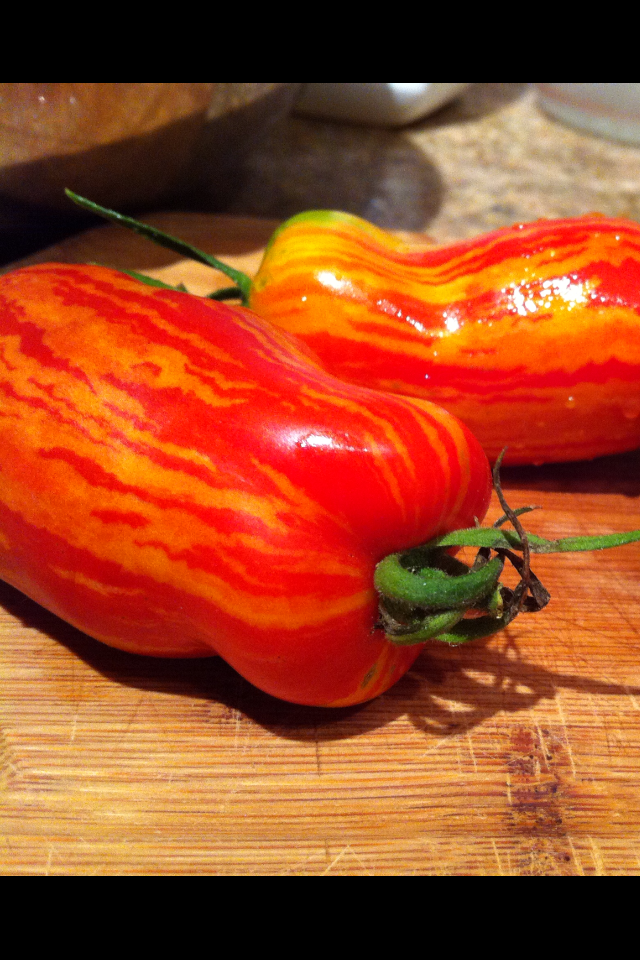
I knew I wasn’t going to be able to winter-sow my seeds, and thought that, at best, maybe I would get some plants going early indoors.  But March and April flew by and I still don’t know where they went.  Then May came and it was on the top of my list to get the seeds in some soil.  Finally by late May, I had to get something in the ground, or I was looking at not having anything more than a measly container herb garden (not that there’s anything wrong with herbs or container gardens, just that I couldn’t shake that first delicious taste of backyard-grown tomatoes that I had last summer).  So, against my earlier protestations that all my tomatoes would come from seeds I sowed myself, I broke down and bought two tomato plants at a fundraising plant sale held nearby and threw them in the ground before I ended up without any tomato plants at all.  (And, since tomatoes were a staple in my garden last year with the four plants I bought from a farmer in Saratoga Springs, I feared not having much of a garden at all).  They shot right up and now there are tomato-heavy Martha Washington and what I thought was Dr. Wyche plants going wild in my backyard.  The Dr. Wyche is definitely not Dr. Wyche; it is way more interesting and beautiful (no offense, doc).  Any guesses on what variety it could be?
Apparently not a Dr. Wyche

Before I gave up for the season, though, I decided just to see what would happen if I tried to sow just a handful of the seeds I saved from my four tomato plants last year.  When I was at Shannon’s picking up some potting soil, the guy looked at me like I was nuts.  He asked why I didn’t just buy some tomato plants.  I explained that I already had tomato plants but I had saved these seeds from last year, and…. never mind.  I didn’t know why I had to justify my gardening habits to this guy.  So off I went and proceeded to plant more than a handful of seeds.  I thought I’d up my chances of getting at least a plant or two.  Little did I expect that every seed I planted would actually produce a plant.  I carefully labeled all of the plants because some of the seeds I had bleached and soaked before planting and some I just popped right in the soil.

Next thing I knew I had more tomatoes than I knew what to do with, but only two plants in the ground that looked like they were far enough along to give me any tomatoes this season.  Then, the unthinkable happened.  Aimee, over at Red Garden Clogs, told me that she had some tomato plants that were just going to be tossed if they didn’t get in the ground, and did I want them.  I was thinking this might be one or two plants, which could be easily accommodated.  And, I thought, if one or two of my seedlings got big enough, I might try putting it in the ground and then I might have about six plants to last year’s four, which was a reasonable increase.  I was a hungry kid in a candy store with eyes much bigger than my garden when I got to Aimee’s.  I left with at least five tomato plants, including Cherokee PurpleBlack Krim, and the two I’m most excited about: Jaune flamme (from seeds that meemsnyc from Gardening in the Boroughs of NYC brought to the Big BK Seed Etc. Exchange last fall), and Paul Robeson tomatoes.

But it doesn’t stop there.  I have discovered tomatoes growing spontaneously in the flower pot near my front door, and also in a potted rose bush.  Every so often, as I’m traipsing my small grounds, I’ll notice a tomato plant with little baby fruit popping out, and only vaguely remember getting them in the ground.  On good days, I’m glad they’re all there, and I silently calculate how soon I’ll have to brush off the canning skills I picked up at a trial class from Red Garden Clogs (btw, invaluable!).  Other times, as I’m ripping away the out of control choke weed that has climbed over my neighbor’s fence (she is out of the country for the summer but would normally be a good neighbor and hack it away for me), I wonder what in the heck I was thinking, putting all the plants in the ground.

Moral of the story: have confidence that what you sow will grow.  Just know what you’re going to do with it when it does.

New Faves Added – Gardens and Arts

Hi all, please check out the “blogs I like” list below.  I added Jason Akers, the Self Sufficient Gardener, whose philosophy and approach to gardening is harmonious with mine (although his experience far exceeds my own).  If you have particular gardening questions, I recommend checking out the site.  His approach tends to be low-maintenance, non-fussy gardening.  Please check out his site, and help support his efforts.  He has done a lot to get others comfortable with gardening, from participating in community events in Kentucky (and beyond) to preach the pesticide-free approach to providing a forum for fellow gardeners everywhere to get specific questions answered.  He also welcomes called in questions to feature on his pod cast — give him a call, and you might hear yourself on his show.

Also added to the RSS feed is a site featuring the work of my favorite contemporary (and rural) artist, Dave Lundahl.  He has been doing cutting-edge art-ography (check out the site, and you’ll “see” what I mean) for many years.  Enjoy his work, and check out more about Dave’s innovative and inspiring work at The Art of the Rural (a blog on rural arts and culture in America), Sugar Magnolia (a blog on photography, mommying, cooking, and living), the New Light Studios site  (this is the artist’s website, maintained by friends and fans, since Dave, himself, is even more of a Luddite than me – although I have been changing my ways of late), and the Facebook page.  Dave, too, is a revel gardener, and has provided many gifts from his art and garden.  They have always been welcome visitors on my return trip to NY from WI, except for a time several years ago when one of his gifts almost got me detained by airport security.  After clearing the metal detector, I watched with curiosity, wondering who around me had such interesting wares that TSA officers were huddled around the screen, whispering to each other.  To my surprise, I got pulled aside and interrogated about what was in my bag.  I had no idea there would be anything of interest, and it crossed my mind that someone had slipped something surreptitiously into my suitcase.  Finally, a gloved officer very carefully dragged my bag out, whisking it away to a secure area and, with nearly comic caution, pulled out an enormous cucumber, plucked fresh that morning from Dave’s garden.  It was a nice, big, plump one.  It may have been around the time they started limiting liquids, and this one exceeded the limit.  Either way, the takeaway: careful what fruit you fly with.  Cucimus sativus is not an easy travel companion.

The link to Dave Lundahl’s art here seems particularly fitting because the sun is crucial for his creations.  While items grown in the garden might not all be masterpieces (check out my recent sunflower failure, in the comments section to Patience is an Amalgam), a lesson we can take away is that art is process, and process is art.  And every garden is a process.  To this revel gardener’s eye, the garden, too, is often art.  (Check out my recent post on the NY Botanical Garden’s exhibit inspired by Monet’s garden at Giverny).

QUESTION: what are some of your favorite blogs, gardeners, artists?  Check out these sites, and let me know what you think.  What’s your strangest travel story?  Have you ever been stopped for flying with juicy fruit?  Live plants?  Stowaway garden goodies?  Go ahead … gimme the dirt!

Patience is an Amalgam

These words came to me tonight.  The sound of them came, and the meaning is still flittering its way in.  I think it has to do with the expression and experience of patience coming in many forms, and that some combination and piecing together of them is what makes patience happen and work.  Patience is a tool as crucial as hands to the gardener.  I am piecing mine together.  In time, in time.

Please don’t mind my absence/break.  I have been busy with the garden (lots of tomatoes, a bunch of herbs, and a few random plants – peppers, cukes, eggplant, etc.) as well as work and other things.  I considered posting a sign stating “OUT TENDING GARDEN,” but then I realized it might be quicker and easier to pop back in just and only when I was ready.  Please know that I enjoy your comments and am happy to hear your news, even if I don’t get back right away.  It encourages me, and I learn so much from them.  Please keep them coming.

I hope you all are having beautiful and bountiful gardening days.  Please let me know what’s growing your way.  Go ahead … gimme the dirt.